Oscarsborg Fortress
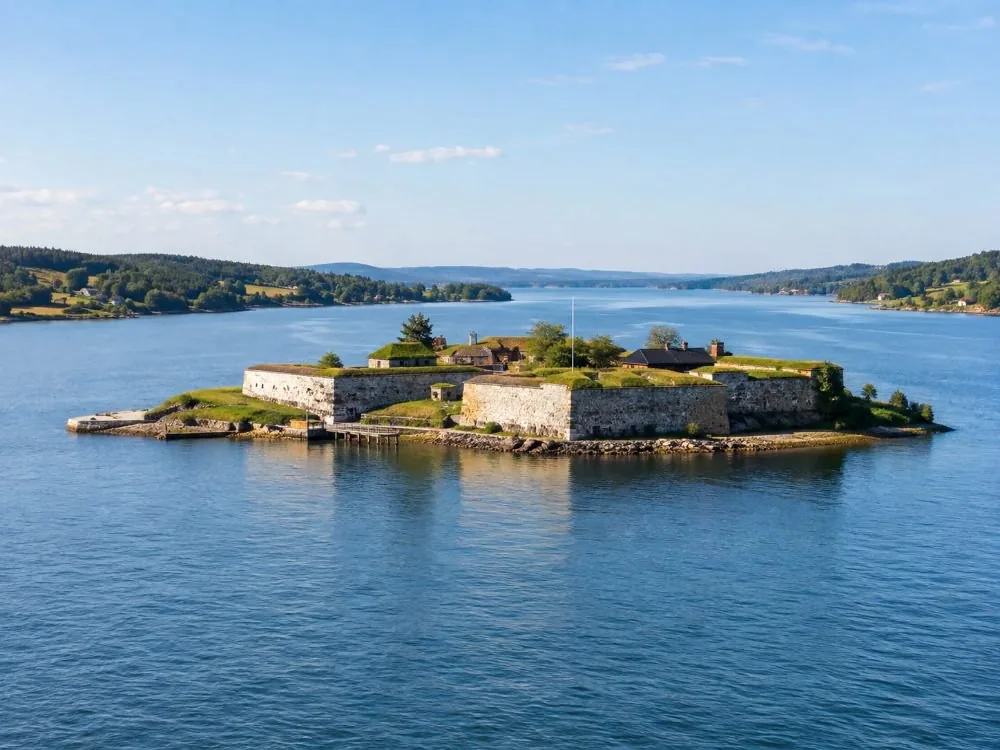
Why a fortress is there at all
Geography. Everything approaching Oslo by sea has to come through the Drøbak narrows, roughly 17 km of constricted water about a kilometre across, over a threshold only about 19 m deep. A gun position on an island in that gap commands the only door into the capital. The same sill that explains the fjord’s slow water exchange explains its fortress. The shape of the fjord.
9 April 1940, in the order it happened
Under the command of Colonel Birger Eriksen, the fortress fired its 28 cm Krupp guns at the incoming German force. Only two of the three fired — “Moses” and “Aron”; the third gun, “Josva”, did not. Then the underwater torpedo battery on Nordre Kaholmen, built between 1898 and 1901, put two torpedoes into Blücher. Those torpedoes were by then about forty years old. The ship went down in the sound. The Blücher, in detail.
What the sinking actually did
Not what the story usually says. The king, the government and about a hundred members of the Storting had already decided the night before to leave Oslo, on intelligence about approaching warships, and their train left Østbanen at around 07:23 to 07:30 — roughly an hour after Blücher went down at about 06:21. The sinking did not trigger the escape. What it did do was destroy the German flagship carrying the troops meant to seize the capital at dawn, delay the occupation of Oslo by hours, and give an evacuation that was already under way the room it needed.
Getting there
Not on a sightseeing cruise from central Oslo. The boats in this catalogue work the inner harbour and the near islands and turn around. Ruter’s B21 and B22 reach Drøbak, weekends in spring and autumn and daily in summer, which makes a day south possible if you check the day you are actually going. Drøbak and the narrows.
If your reason for coming to Oslo involves 9 April 1940, plan Oscarsborg as its own day from Drøbak. Booking a ninety-minute harbour cruise in the hope of seeing it is the single commonest misdirected booking on this fjord.
Frequently asked questions
Can you visit Oscarsborg on an Oslofjord cruise?
Not on a city cruise. Oscarsborg is far south in the Drøbak Sound and the sightseeing boats from the City Hall quays and Langkaia work the inner harbour. Ruter’s B21 and B22 lines reach Drøbak, weekends in spring and autumn and daily in summer. Getting to Drøbak.
What happened at Oscarsborg in 1940?
On 9 April 1940 the fortress, under Colonel Birger Eriksen, fired two of its three 28 cm Krupp guns — “Moses” and “Aron”, but not “Josva” — and then the torpedo battery on Nordre Kaholmen, built 1898 to 1901, put two torpedoes into the cruiser Blücher. The full account.
Why is Oscarsborg where it is?
Because everything sailing to Oslo has to pass through the Drøbak narrows, roughly 17 km of water about a kilometre wide over a sill about 19 m deep. A battery on an island there commands the only sea approach to the capital. The fjord’s shape.