Drøbak and the Narrows
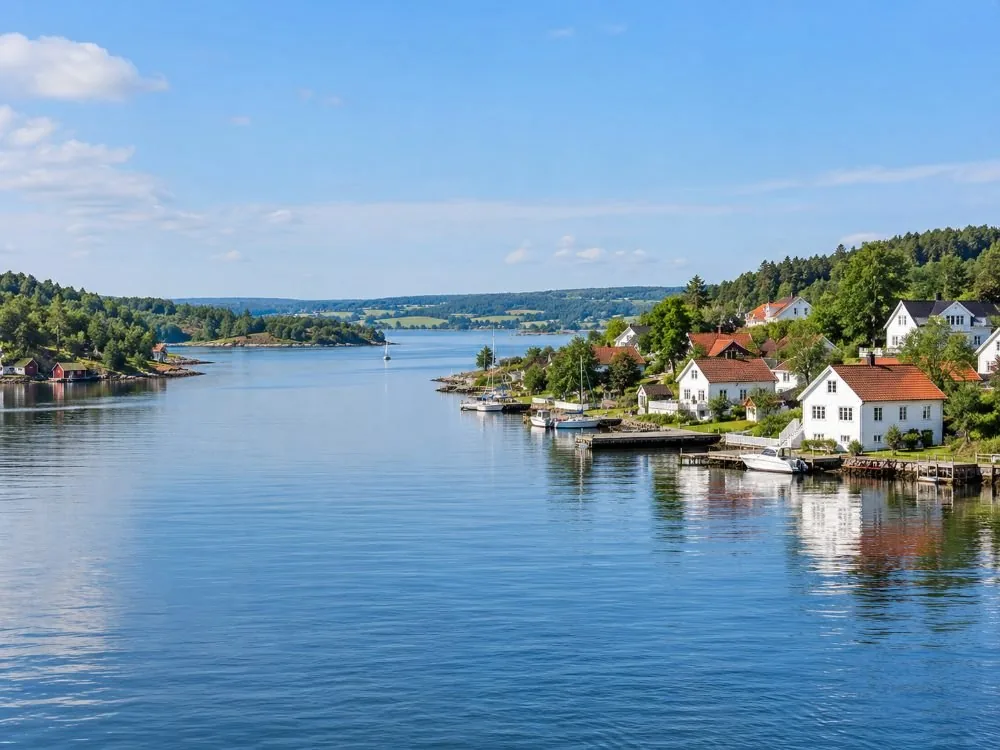
Why the narrows matter
Everything about the Oslofjord runs through this gap. It is why a fortress sits on an island here and why a German cruiser was sunk in the sound on 9 April 1940. It is also why the deep basins north of it exchange water so slowly that in several of them the oxygen in the bottom water falls low enough to kill everything living there. One shallow threshold, two completely different kinds of consequence. The state of the water.
Getting there
Ruter’s B21 and B22 boats reach Drøbak, at weekends in spring and autumn and daily in summer. That is public transport rather than a cruise product, and it is the reason a Drøbak day needs planning around the calendar in a way an Oslo harbour cruise never does. The Ruter boats, in full.
Not from a city cruise
Worth repeating because the question comes up constantly: the six sightseeing cruises in this catalogue work the inner harbour — Akershus, Bjørvika, the Bygdøy shore, Dyna lighthouse, the near islands — and return to the quay they left. Drøbak and Oscarsborg are not on any of those routes, including the six-hour trip that lands on five islands — which is not wheelchair accessible, involves walking and climbing, and requires under-15s to be accompanied. What a city cruise does cover.
Can’t make these dates?
Browse more available Oslofjord cruises and find one that fits your schedule — all with instant confirmation and free cancellation.
Frequently asked questions
How do you get from Oslo to Drøbak by boat?
Ruter’s B21 and B22 lines, which run at weekends in spring and autumn and daily in summer. No sightseeing cruise from central Oslo goes there. The public boats.
Do Oslofjord cruises go to Drøbak?
No. All six work the inner harbour and the near islands and come back to their starting quay, including the six-hour island trip — which lands on five islands with a live guide in English, 4.5 from about 158 reviews, is not wheelchair accessible, involves walking and climbing, and requires under-15s to be accompanied. The city route.
What is the Drøbak sill?
The shallow threshold at the fjord’s narrows, only about 19 m deep, in a constriction roughly 17 km long and about a kilometre wide. It is why the deep basins behind it renew their water so slowly. Why that makes it a sill fjord.